Vanderbilt University

At Vanderbilt University’s Marketing Communications department, I work as part of the Digital Strategies team:
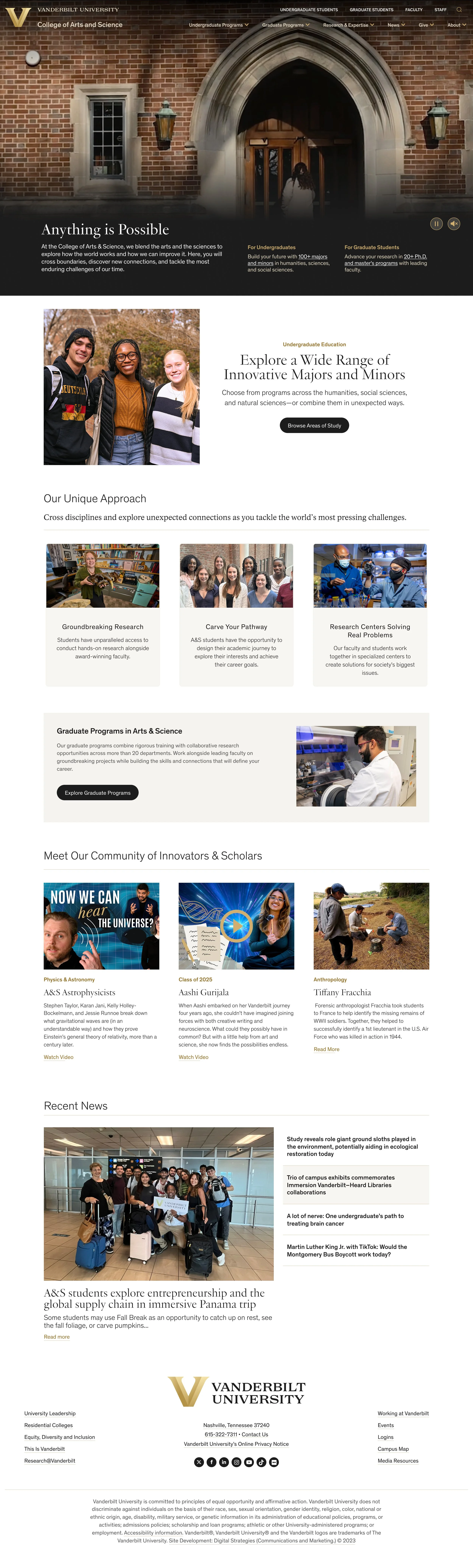
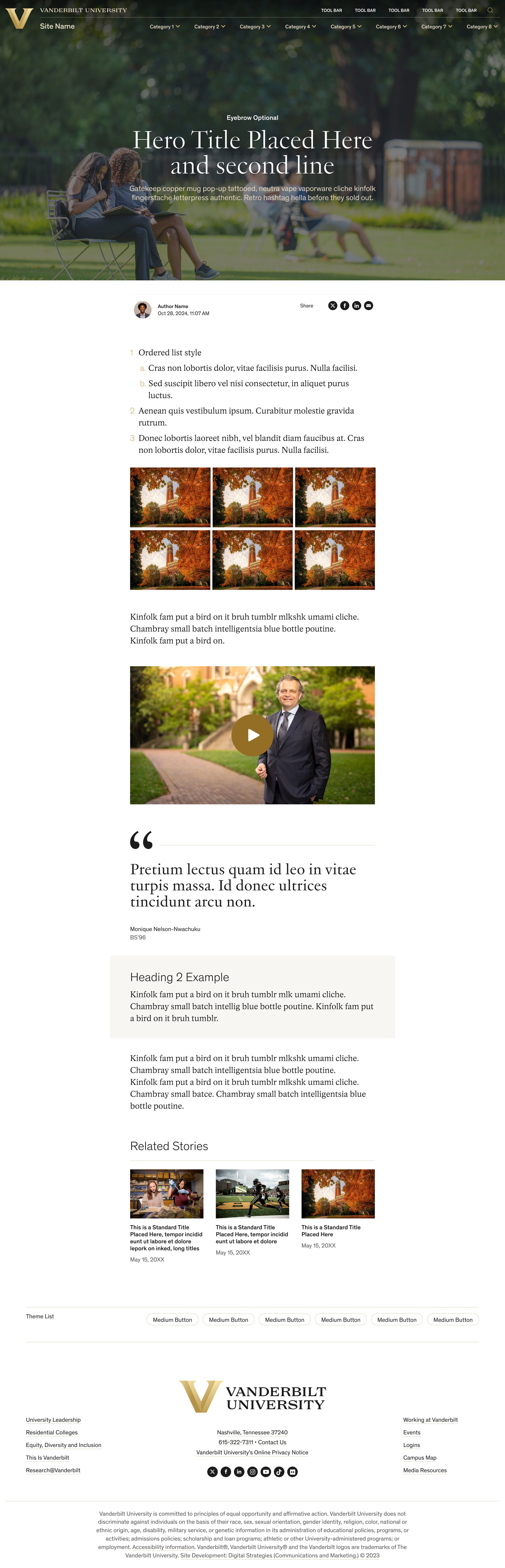
Architecting and maintaining comprehensive design system documentation of 70+ components and templates, ensuring brand consistency and scalability across 20+ digital products and university platforms
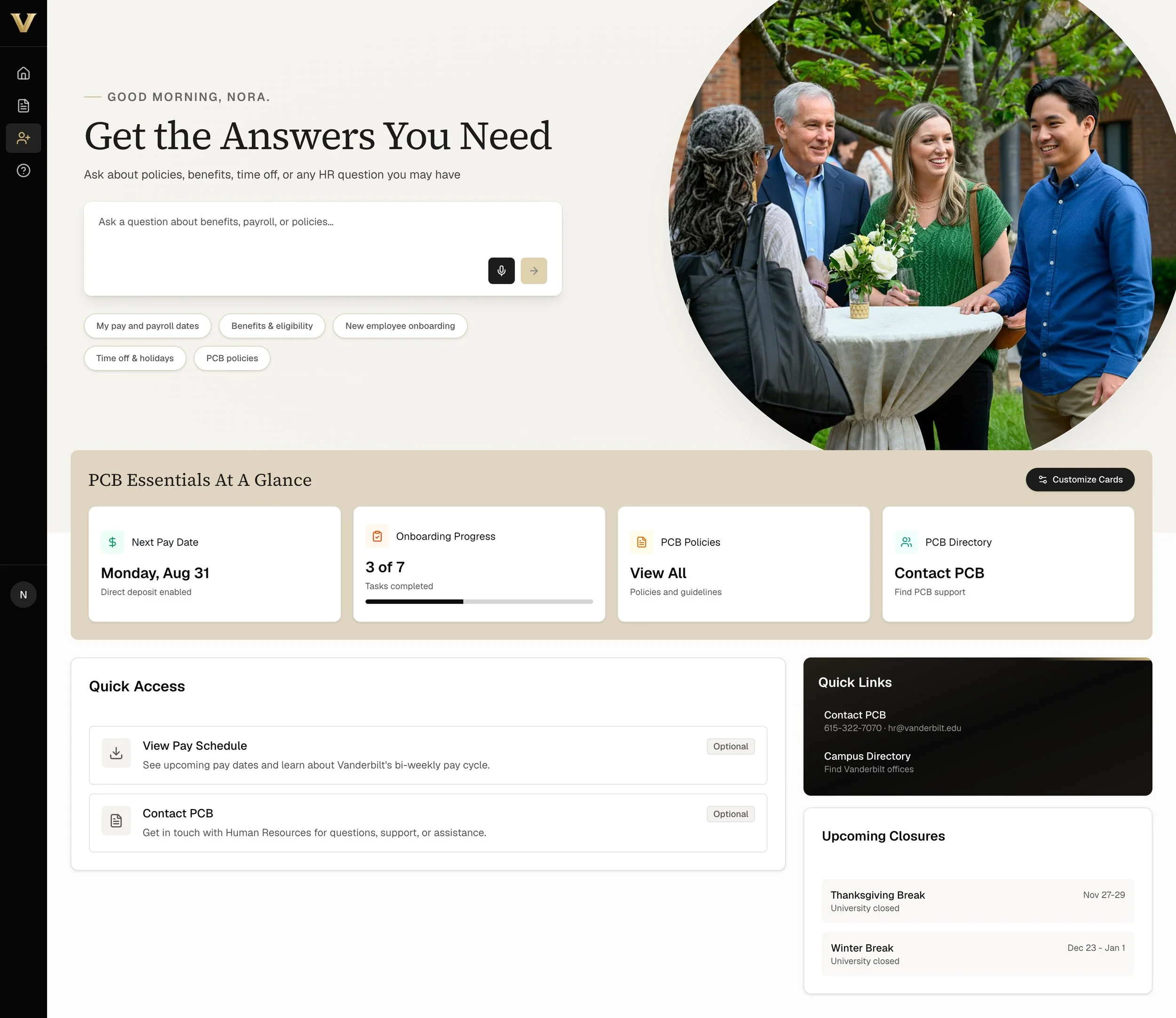
Leading user-centered design initiatives leveraging AI tools to rapidly prototype an AI-led HR Navigator Experience, reducing faculty help desk ticket volume by improving self-service UX
Driving design system adoption by collaborating with content managers, software engineers, and WordPress developers in agile sprints to deliver responsive, accessible solutions
Championing WCAG 2.1 AA compliance across university digital ecosystem, conducting accessibility audits and implementing inclusive design principles
Continuously evolving component library features and UI patterns, implementing Figma-based design tokens to reduce design-to-development handoff time by 30%
Currently working with AI assisted design tools to prototype and hand off an AI-led experience to our internal AI dev team for Vanderbilt’s HR department.
Problem: Vanderbilt HR’s web ecosystem spans multiple sites, policies, and tools. Users struggled to locate answers, generating 8,000+ helpdesk tickets per month. The pain centered on poor findability, inconsistent pathways, and fragmented content, leading to delays and duplicated support work.
Goal: Reducing help desk ticket volume by 30% by offering a navigator experience with personalized, dynamic content and AI-generated answers trained on the HR knowledge base, ex.: Policy highlights, onboarding process tasks, payroll information, benefits information, etc.
Vanderbilt HR AI Navigator Experience - Design Highlights (ongoing)
After numerous iterations, the content, functionality and user flows started to come together. I used the Zeroheight connector for Figma Make to bring the design system documentation directly into my Figma Make project. This connected Figma Make to zeroheight via MCP (Model Context Protocol), so I could reference components, elements and UI while refining the design.
Check out the live Figma Make project:
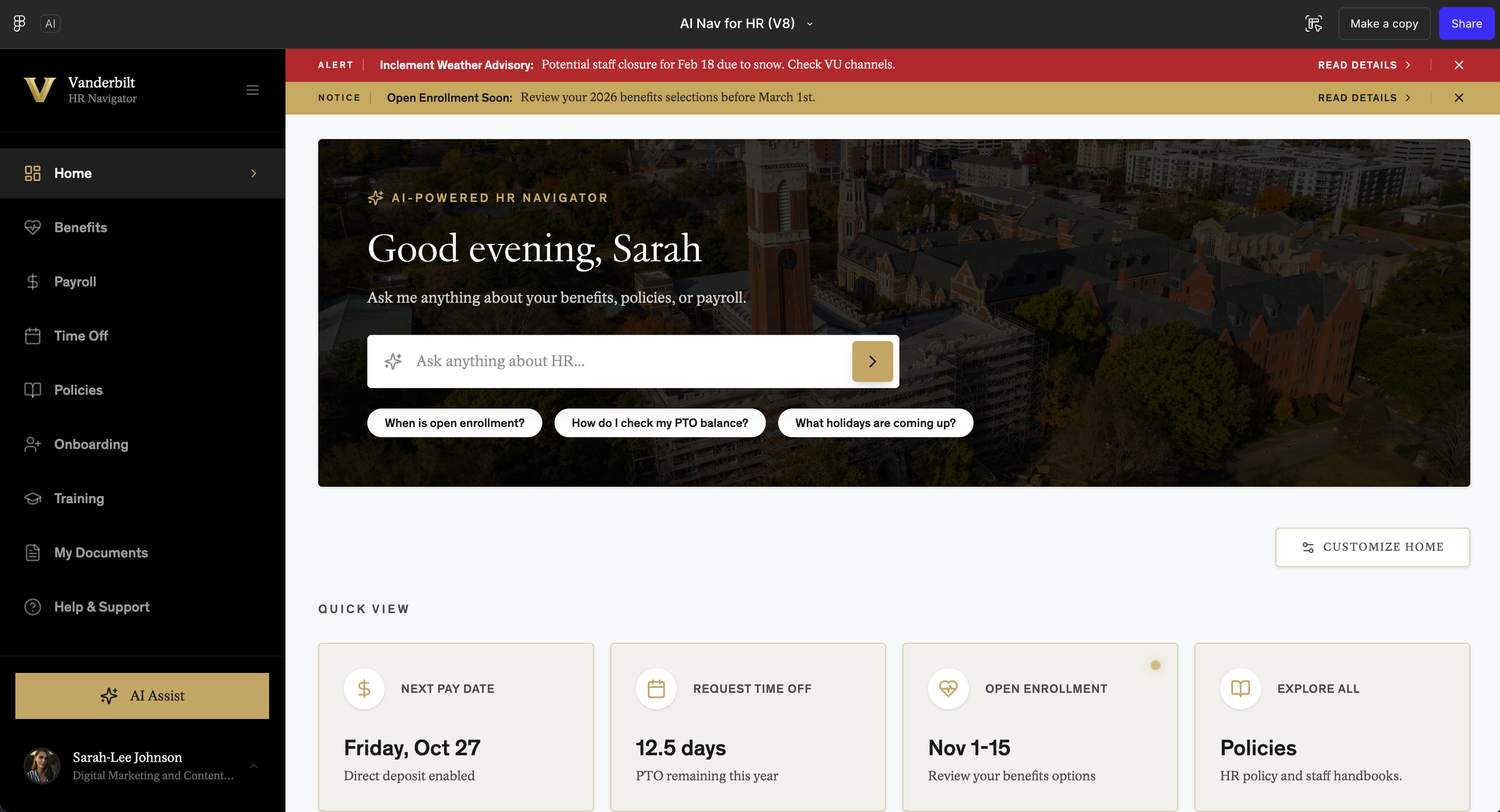
To refine the functionality and work on the UI, I switched over to v0 by Vercel which seemed to better support my attempts to evolve the UI of the experience. Check out how the navigator looked at this point here.
After the the dev team built the environment for our proof of concept, we started to user test the initial stripped down version with a few internal employees. After gathering some quality feedback, the project has been updated. See the clickable prototype here.
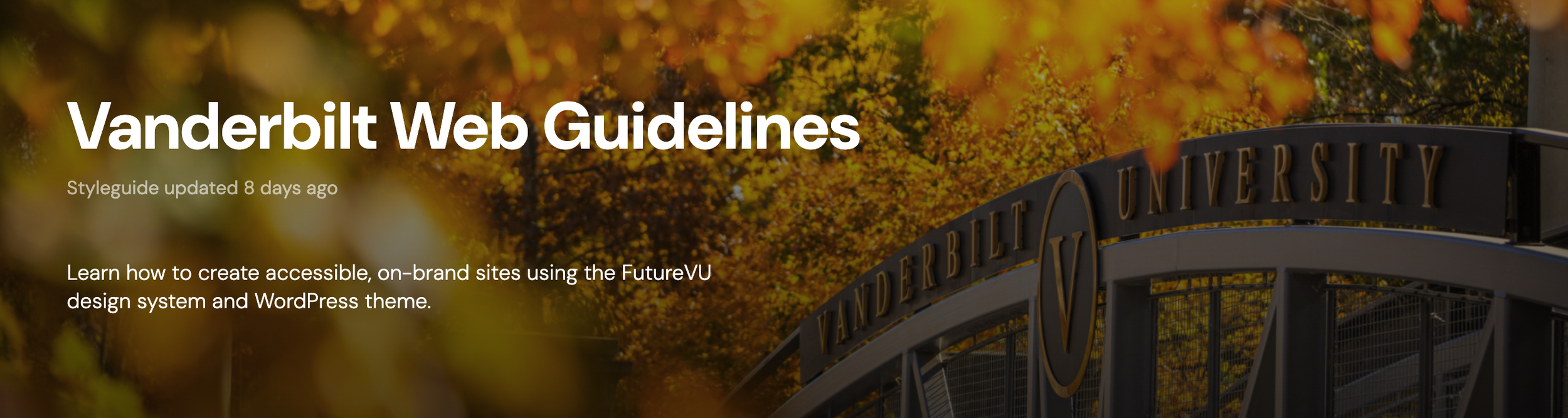
FutureVU Design System Management and Documentation Site
In the last year as part of our enablement efforts, I built out from scratch Vanderbilt's Web Guidelines as a standalone project space on Zeroheight. The FutureVU design system documentation is for Wordpress page builders and all the different schools and department resources in order to give them the tools necessary to manage and update their own websites.
organized design system and brand guidelines information into a cohesive documentation site
built out templates for pages of components and Wordpress page templates to maintain cohesiveness
built a Resources section with training for our Wordpress page builders and university personnel
updated monthly Release Notes with new updates and features
integrated the style guide into our Microsoft Teams channel where people can ask it questions in the thread, decreasing help desk tickets
Check it out in action here:
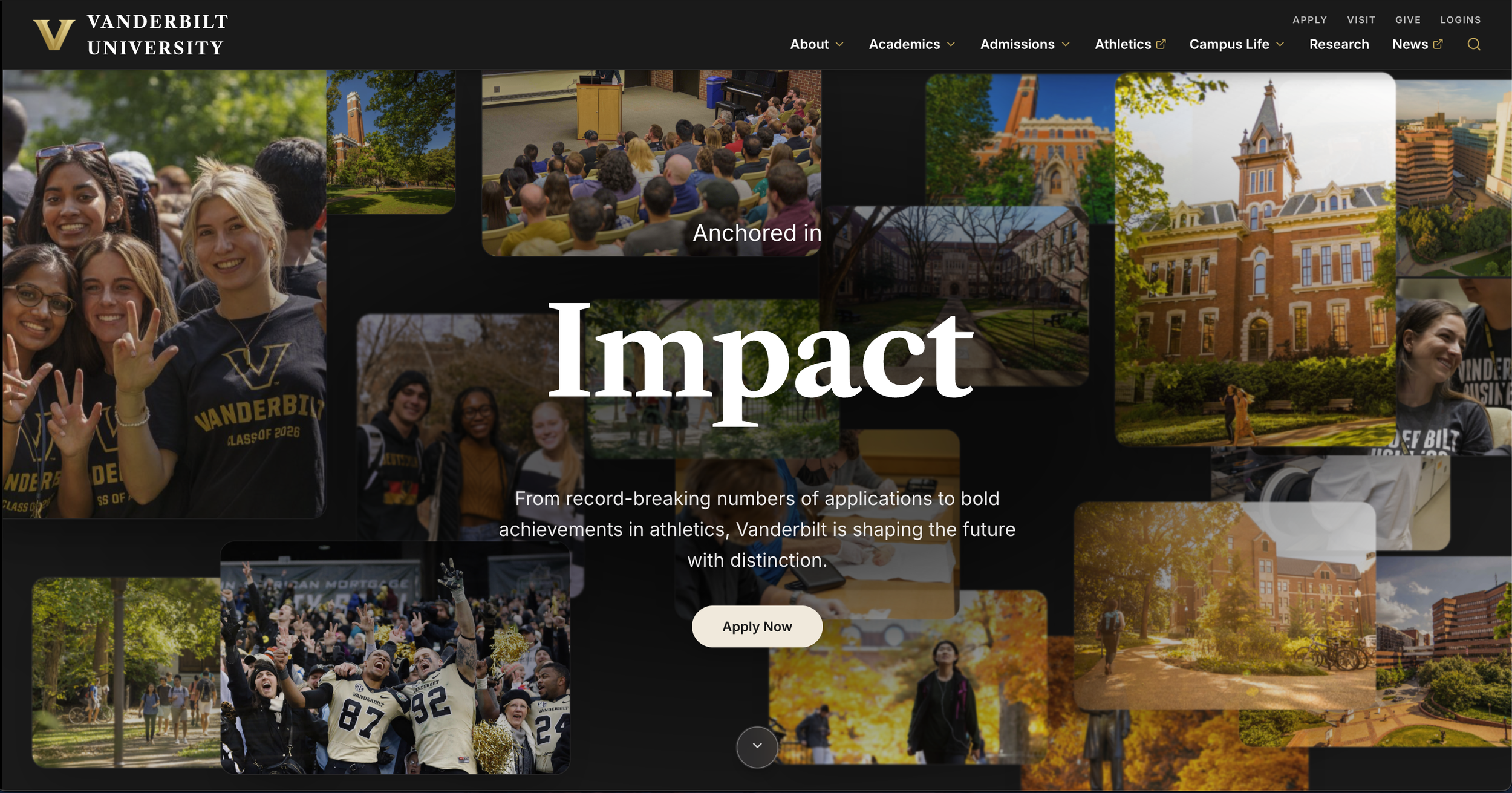
Vanderbilt University Homepage - AI-assisted redesign (ongoing)
Currently working on prototyping a new homepage for the university, using v0 by Vercel.
The process:
Fine combing previous research and content recommendations (fed all research into Claude and asked questions, created summaries before design phase)
Brainstorming workshop with the design team (rapid fire brainstorming session, getting to the “third third of ideas”)
Rapid prototyping the most successful approach
Refining for user testing
User testing with 16 users (8 college aged and 8 parents) and using Claude to summarize findings
Internal review with content and development teams
Final review with stakeholders (university leadership)
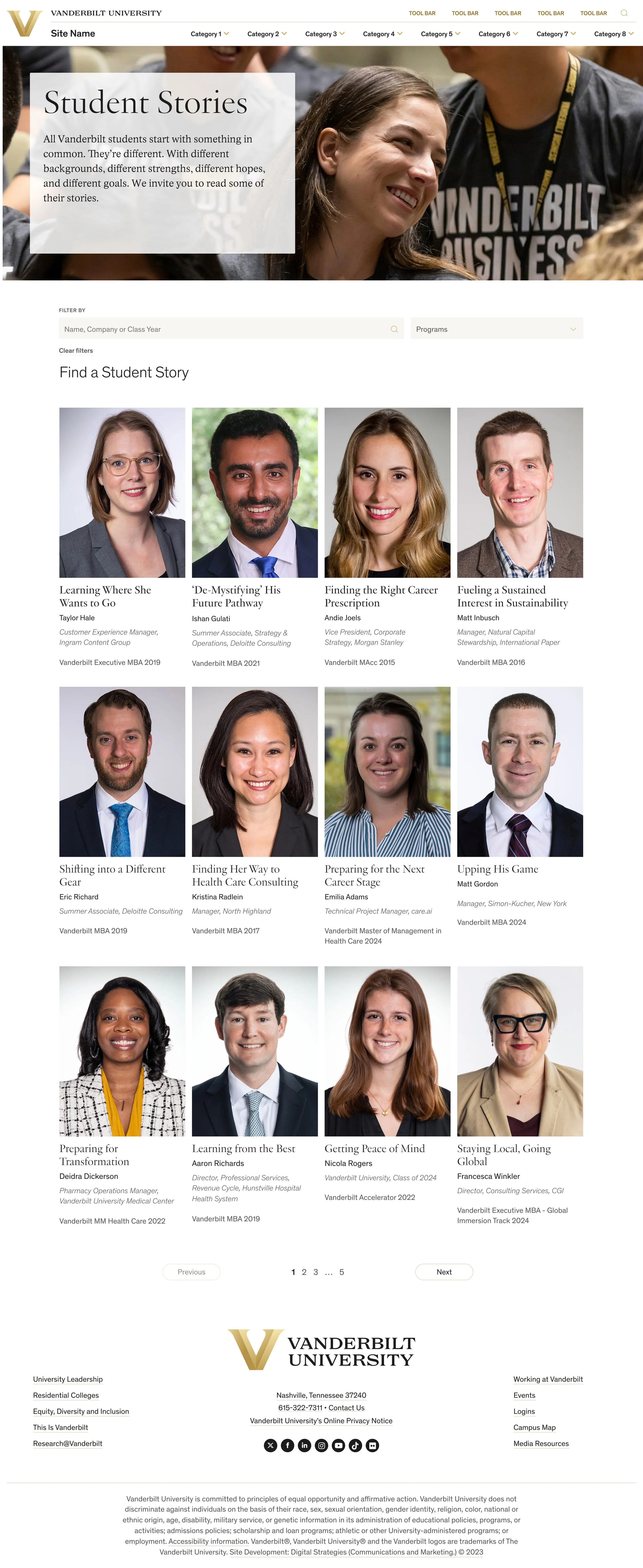
Migration Projects and Component Development - Design Highlights
As part of the Digital Strategies team, I collaborated with different disciplines in migrating multiple departments and schools within Vanderbilt to our new FutureVU design system. In the process I continually worked on creating and evolving design system components and templates.